Imbolc
Pronounced im-bulk
Monday, February 1, 2027
Imbolc marks the first stirrings of spring, halfway between the winter solstice and the spring equinox.
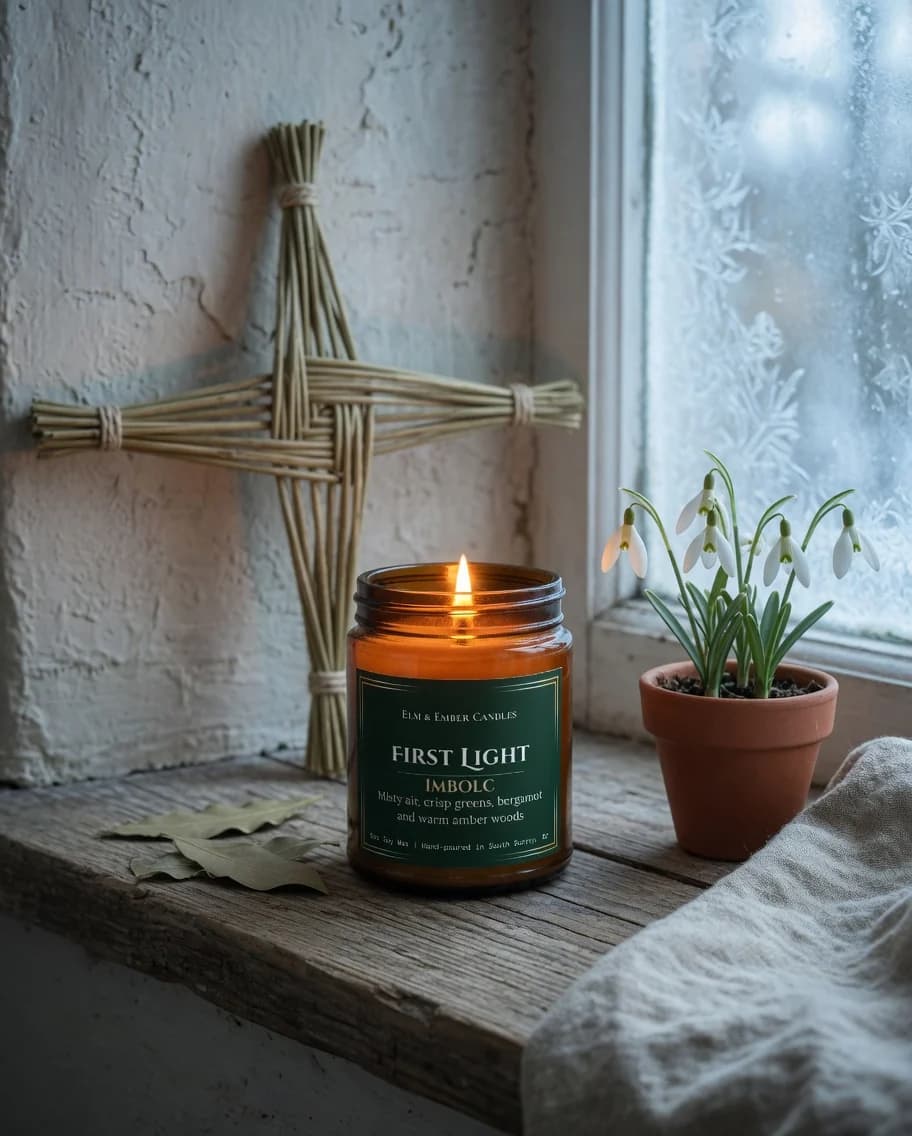
What is Imbolc?
Imbolc (pronounced im-bulk) begins on the evening of January 31 and falls on February 1. In the farming year it was linked with the first lambs and fresh milk, and the name is often explained as i mbolg, “in the belly”, though scholars still debate its meaning.
It belongs to Brigid, goddess of the hearth, poetry and healing in Irish tradition, and later St Brigid, one of Ireland’s patron saints. The two are so closely woven together that it is hard to tell where one ends and the other begins.
St Brigid’s Day in Ireland
Crosses are woven from rushes and hung over doors to protect the house for the year ahead, and on the eve a cloth, the brat Bríde, is left outside for Brigid to bless as she passes. Holy wells are visited and dressed with ribbons and flowers.
Since 2023, St Brigid’s Day has been a public holiday in Ireland, the first named for a woman.
Ways to mark Imbolc at home
Weave a Brigid’s cross
Rushes are traditional, but paper strips or dried grasses work too.
Leave a cloth outside overnight
A scarf or ribbon on the eve of Imbolc, kept afterwards for comfort and healing.
Clear a space
A small spring clean to make room for what’s coming.
Look for the first signs
Snowdrops, lengthening afternoons, the first birdsong at dawn.